
A heat pump water heater is an energy-efficient hot-water system that uses electricity to transfer heat from the surrounding air into water stored in a tank. Unlike a conventional electric geyser, which mainly heats water using an electrical resistance element, a heat pump moves available heat using a refrigeration cycle. This can reduce electricity consumption for water heating, although actual performance depends on the model, installation conditions, hot-water demand and operating settings.

For homes, apartments, hotels, gyms, hospitals and other facilities in Bengaluru, a heat pump may be worth considering when hot water is needed regularly and the owner wants to compare long-term running costs—not just the initial purchase price. H2O Pure Zone can help customers understand the application and compare suitable water-heating options according to site conditions.
What Is a Heat Pump Water Heater?
A heat pump water heater (HPWH) extracts heat from ambient air and transfers it to water. Think of the operating principle as similar to a refrigerator working in reverse: a refrigerator removes heat from its cabinet and releases it outside, while a heat pump water heater collects heat from the surrounding air and delivers it to the water tank. The compressor, refrigerant circuit, heat exchangers and controls work together to move that heat.
Because the unit moves heat rather than relying only on direct electrical heating, a well-selected heat pump can deliver more heat energy to the water than the electrical energy it consumes. Efficiency is commonly described using a coefficient of performance (COP), but the figure is meaningful only when you know the test conditions and the exact product model. Do not assume every heat pump achieves the same savings.
How Does a Heat Pump Water Heater Work?
- Air is drawn across a heat exchanger: The unit absorbs heat from surrounding air.
- Refrigerant absorbs the heat: The refrigerant changes state as it collects thermal energy.
- The compressor raises the refrigerant temperature: Electrical energy powers the compressor and helps raise the refrigerant to a temperature suitable for heating water.
- Heat is transferred to water: A condenser or heat exchanger transfers the collected heat into the storage tank or water circuit.
- The cycle repeats: The system continues until the control target is reached, subject to the model’s operating limits.
Some units also have an electric backup element to support higher demand or specific operating conditions. Check the product manual to understand when backup heating operates and how to select economy, auto or high-demand modes.
Types of Heat Pump Water Heaters
1. Integrated Heat Pump Water Heater
An integrated model combines the heat pump components and storage tank in one appliance. It can simplify system planning because the main components are supplied as a packaged unit. Before installation, check the unit’s dimensions, airflow clearances, service access, noise level, tank capacity and the manufacturer’s requirements for indoor or outdoor placement.
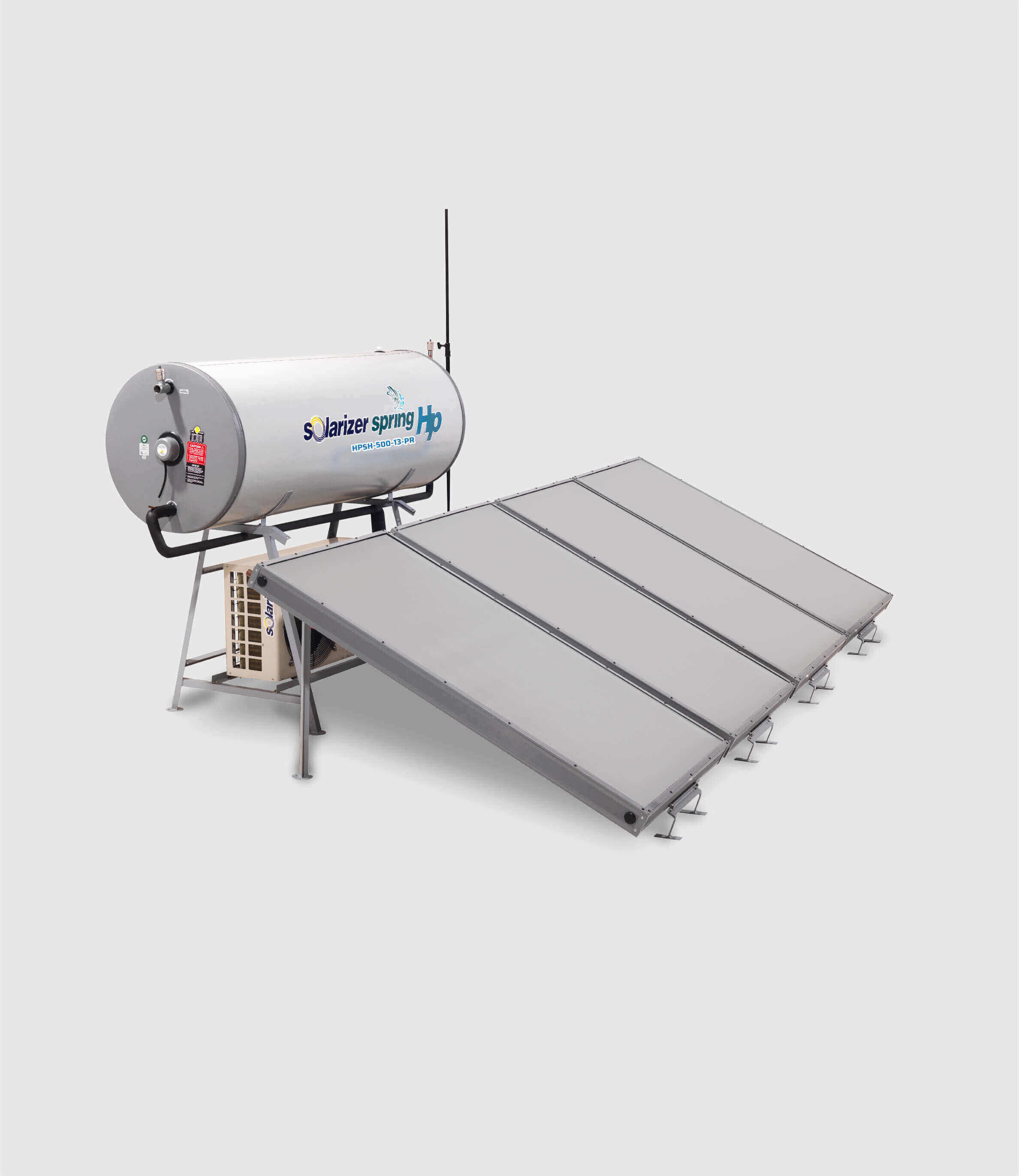
2. Split Heat Pump Water Heater
A split system separates the heat pump unit from the water storage tank. This arrangement may provide more flexibility in positioning the tank and outdoor unit, depending on the product design. It also requires careful planning of refrigerant or water connections, pipe lengths, insulation, drainage, electrical supply and service access. Only a technician familiar with the chosen model should install it.
3. Domestic Heat Pump
Domestic units are designed for the hot-water needs of a house or a smaller property. Selection should be based on the number of people, bathing habits, number of bathrooms, desired water temperature and when hot water is needed. A tank that is too small may run short during peak demand; an unnecessarily large unit may increase purchase cost and standby losses.
4. Commercial Heat Pump Water Heater
Commercial systems are designed for higher or more continuous hot-water demand in settings such as hotels, hostels, hospitals, gyms, salons, restaurants and staff facilities. These projects need a load assessment rather than a guess based only on building size. The designer should consider peak-hour demand, recovery time, storage volume, circulation losses, required delivery temperature, redundancy and maintenance access.
Heat Pump vs Conventional Electric Geyser vs Solar Water Heater
| Feature | Heat pump water heater | Electric storage geyser | Solar water heater |
|---|---|---|---|
| Energy source | Electricity to move heat from ambient air | Electricity used mainly for resistance heating | Solar thermal energy, often with backup |
| Space and installation | Needs airflow, clearance and service access according to model | Usually compact; electrical and plumbing provisions required | Needs suitable roof space, solar exposure and pipe routing |
| Weather dependence | Performance varies with ambient conditions and model limits | Not dependent on sunlight or ambient heat in the same way | Solar contribution varies with sunlight and weather |
| Best evaluation method | Compare rated efficiency, hot-water output and site conditions | Compare capacity, wattage, insulation and usage | Compare collector/tank design, site exposure and backup |
| Backup needs | Some models include electric backup; verify the specification | Heating element is part of the normal operating system | Backup may be needed during low-sun periods |
No single option is best for every building. A site inspection and a realistic hot-water demand estimate help compare purchase cost, installation requirements and expected running cost.
Benefits of a Heat Pump Water Heater
- Potentially lower electricity use: Heat pumps can use substantially less electricity than direct electric resistance water heating when operating under suitable conditions. Savings depend on the baseline system, hot-water use, tariffs and the unit’s real-world performance.
- Useful for regular hot-water demand: Properties that need hot water every day may benefit more than locations with occasional, very small demand.
- Suitable for several applications: Domestic and commercial models are available, with capacities and configurations selected for different loads.
- Can complement other energy systems: A heat pump may be considered alongside rooftop solar electricity, but electrical and control compatibility should be assessed rather than assumed.
- Less dependence on direct resistance heating: When the heat-pump cycle meets the demand, the system may avoid relying solely on a high-wattage heating element.
Do not treat promotional savings percentages as guaranteed. Ask for the model’s technical data, rated COP or efficiency, test conditions, daily hot-water output and estimated consumption for your usage pattern.
Is a Heat Pump Water Heater Suitable for Bangalore?
Bengaluru’s relatively moderate climate can make air-source heat pumps worth evaluating, but local suitability still depends on the installation location, ventilation, outdoor exposure, water quality, required hot-water temperature and the manufacturer’s permitted operating range. A unit installed in a small, poorly ventilated enclosure may not perform as intended if it cannot obtain the airflow it requires.
For a house, check where the unit and tank will sit, how hot water will reach bathrooms, and whether long pipe runs will cause heat loss. For an apartment, confirm whether the association permits the proposed equipment and whether there is enough space for safe installation and maintenance. For hotels or gyms, estimate the busiest usage periods and discuss whether storage, recirculation or multiple units are appropriate.
If the property uses hard borewell water, ask the installer or manufacturer whether water hardness, scaling or corrosion could affect the tank, heat exchanger, valves or connected plumbing. Follow the product’s water-quality requirements and maintenance schedule; do not assume all heat pumps require the same treatment.
How to Choose the Right Capacity
Do not select a heat pump only by the number of bedrooms or by choosing the largest tank available. A qualified supplier should estimate daily hot-water demand and peak-hour demand. Important inputs include:
- Number of occupants or users.
- Number of showers and bathrooms used at the same time.
- Whether hot water is needed for bathing only or also for kitchens, laundry or commercial processes.
- Desired hot-water temperature and incoming cold-water temperature.
- How quickly the system must recover after the tank is depleted.
- Available space, electrical supply and installation route.
- Whether a backup heater or redundant unit is required.
For commercial projects, ask for a written sizing calculation and an explanation of assumptions. A model’s storage capacity is not the same as its continuous heating output or the volume of hot water it can deliver during a peak period.
Installation Checklist
- Confirm the exact model, tank volume, rated heating output and electrical requirements.
- Provide the airflow and service clearances specified by the manufacturer.
- Check the floor or mounting structure can support the filled tank and equipment.
- Plan cold-water inlet, hot-water outlet, isolation valves, drainage and any required safety devices.
- Insulate hot-water pipes appropriately to reduce heat loss.
- Provide correctly rated electrical protection, earthing and isolation as required by local electrical rules and the manufacturer’s instructions.
- Keep the unit accessible for cleaning, inspection and future repairs.
- Test temperature settings, controls, water leakage, drainage and operation before handover.
- Receive the warranty documents, maintenance schedule and model manual.
Electrical and plumbing work should be handled by qualified professionals. Do not install or wire the unit based only on a generic online guide; product designs and safety requirements differ.
Running Cost: How to Estimate It Properly
Actual running cost depends on how much hot water you use, the temperature rise required, the heat pump’s efficiency under your conditions, standby and pipe losses, backup-heater use and your electricity tariff. A practical comparison should use the same hot-water demand for each option.
Ask the supplier to show the calculation inputs: expected daily hot-water volume, target temperature, estimated energy use, electricity tariff and assumed operating hours. Compare that estimate with your existing geyser bills or measured consumption where possible. The simple relationship is: estimated running cost = estimated electricity consumption in kWh × applicable electricity tariff per kWh. This is an estimate, not a guarantee of future bills.
Also compare the total installed cost, warranty, service access, expected maintenance and likely equipment life. A unit with a higher initial price may or may not be the most economical choice for your property.
Maintenance and Common Issues
Less hot water than expected
Possible causes include undersizing, unusually high simultaneous demand, incorrect settings, airflow restrictions or a backup mode that is not configured as expected. Check the manual and request a service inspection if the issue continues.
Long heating time
Heat pumps may heat a tank more gradually than a high-power resistance element. Check the model’s rated recovery performance, operating conditions and usage schedule before deciding whether the system is undersized.
Noise or vibration
The fan and compressor produce operating noise. Use the manufacturer’s placement guidance, keep the unit stable and avoid installing it beside noise-sensitive rooms where possible. A new or unusual vibration should be checked by a technician.
Scaling or reduced performance
Water quality and mineral deposits can affect some components. Follow the manufacturer’s guidance for inspection, cleaning and water treatment. Never use an unapproved descaling chemical or procedure.
Routine care
Keep air inlets and outlets clear, inspect visible pipe insulation and leaks, check controls and safety devices according to the manual, and arrange professional service at the recommended intervals. Do not open refrigerant circuits or electrical compartments yourself.
Heat Pump Brands Available Through H2O Pure Zone
H2O Pure Zone deals in heat-pump and water-heating solutions from V-Guard, ZeroB, Solarizer and Racold. These brands can be included in your shortlist when you are comparing heat pump water-heating options for a home, apartment, hotel, gym, hospital or commercial property in Bengaluru. Product ranges, models and availability can vary, so contact H2O Pure Zone to confirm the current options for your application.
V-Guard Heat Pump Options
V-Guard is one of the brands H2O Pure Zone can discuss with customers exploring heat pump water heating. Before choosing a unit, verify the exact model number, tank capacity, rated heating output, operating temperature range, efficiency data, electrical requirements, warranty and service coverage. Do not choose a model by capacity alone; match it to the property’s daily and peak hot-water demand.
ZeroB Heat Pump Options
ZeroB is another brand H2O Pure Zone can help customers explore. Compare the available model’s heating capacity, storage arrangement, energy-performance figures and installation requirements with your site’s hot-water demand. Ask for the current technical datasheet and written quotation before making a purchase decision.
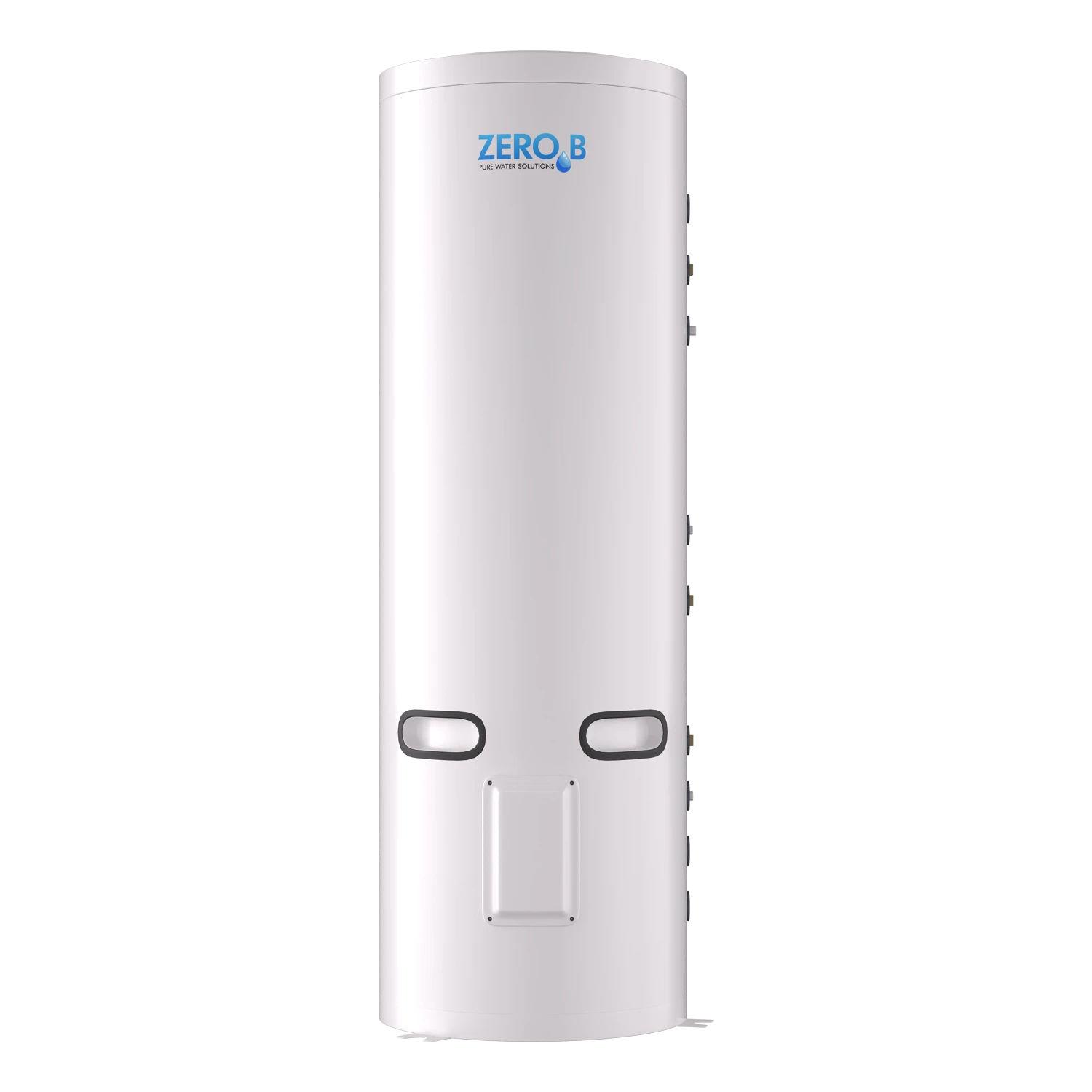
Solarizer Heat Pump Options
Solarizer is included among the heat pump brands handled by H2O Pure Zone. When comparing a Solarizer option, check whether the available configuration is integrated or split, the tank volume, rated heating output, permitted installation environment, electrical load, warranty terms and service arrangements. Confirm the current model and all specifications before relying on them for project sizing.
Racold Heat Pump Options
Racold is also a brand H2O Pure Zone can discuss with customers comparing water-heating solutions. Ask the team to confirm the current heat pump model suitable for your use case, its rated output, storage capacity, energy-performance data, installation scope, warranty and local after-sales support. This article does not assume that every Racold water-heating product is a heat pump; verify the product type and model before ordering.
How to Compare These Brands Fairly
Compare the same application and operating conditions across quotations. Important checks include rated heating capacity, storage volume, COP or other applicable efficiency rating and its test conditions, maximum outlet temperature, electrical phase and load, operating temperature range, noise level, warranty coverage, spare-parts availability, installation inclusions and service support. Ask each supplier to identify the exact model number and provide a current datasheet. Product photos alone do not confirm current stock, performance or warranty terms.
Need help choosing? Share the property type, number of users, approximate daily hot-water demand, available installation space and required hot-water temperature with H2O Pure Zone. The team can help you compare the currently available V-Guard, ZeroB, Solarizer and Racold options against your requirements. Final selection should be based on verified specifications and a site assessment, not brand name alone.
Frequently Asked Questions
Does a heat pump water heater work using electricity?
Yes. Electricity runs the compressor, fan and controls, while the system transfers heat from the surrounding air into the water. Some models also use an electric backup element.
Can it replace a conventional electric geyser?
It may replace or supplement a conventional geyser if the selected model can meet the property’s temperature, capacity, plumbing and installation requirements. A site assessment is recommended before changing an existing system.
Can a heat pump provide hot water at night?
Yes, if the system is correctly sized and operated; stored hot water can be used at night. Recovery time and available volume depend on the tank, model and usage pattern.
Is an integrated heat pump better than a split model?
Not automatically. Integrated units package the main components together, while split systems separate them. The better choice depends on available space, layout, noise considerations, service access and the manufacturer’s design.
How much can I save on electricity?
There is no single reliable percentage for every property. Savings depend on the current water heater, demand, ambient conditions, tariff, installation and the selected model’s real-world efficiency. Request a transparent estimate based on your usage.
Is a heat pump the same as a solar water heater?
No. A solar thermal water heater collects heat from sunlight using solar collectors. A heat pump transfers heat from surrounding air using an electrically powered refrigeration cycle. They are different technologies, although a property may evaluate them as alternative or complementary options.
Can it be used in a hotel, gym or apartment building?
Commercial and larger-capacity systems can be designed for these uses, but the equipment must be sized for peak demand and the required delivery temperature. A qualified designer should assess storage, recovery, circulation, redundancy and maintenance needs.
Get Help Choosing a Heat Pump Water Heater in Bangalore
If you are considering a heat pump for a home, apartment, hotel, gym or commercial facility in Bengaluru, begin with a hot-water demand assessment rather than choosing only by brand or tank size. Share the number of users, application, available installation space and existing water-heating arrangement so that suitable options can be compared.
H2O Pure Zone – Complete Water Solution. Contact the team for product guidance and a site-specific quotation. Confirm the exact model, installation scope, warranty and service terms before placing an order.
Further Reading
- U.S. Department of Energy: Heat Pump Water Heaters — explains the basic technology and potential efficiency advantages.
- ENERGY STAR: How Heat Pump Water Heaters Work — describes the heat-transfer cycle and common operating modes.
- H2O Pure Zone: Rooftop Solar Guide — for readers also exploring solar energy options for their property.
Editorial note: Product availability, specifications, prices, incentives and warranty terms can change. Verify the current model datasheet and quotation before making a purchase. This guide is informational and does not replace a site inspection or manufacturer instructions.